
December 2025
Heading


December 2025
Lessons from the season

With Minty 28th November and Trafalgar Brussels sprouts, lambs lettuce and leeks
Two Bed Trial 2025
The no dig bed has once again given more harvest than the dig bed, even though its growth was hampered by squash plants rooting in from one side. They're a variety new to me, Ayote with delicious green flesh, and the plants have way more vigour than other squash I grow.
The Ayote roots travelled under the pathway and into the no dig trial bed, reducing harvests of leeks and kale in particular. Even so, we notice how the smaller kale plants give as much harvest as larger plants on the dig bed. the totals from 5 plants each bed were 4.91 kg dig, and 4.99 kg from no dig.

24th June after final potato harvest, peas removed, leeks and cabbage transplanted. Dig bed left and no dig right
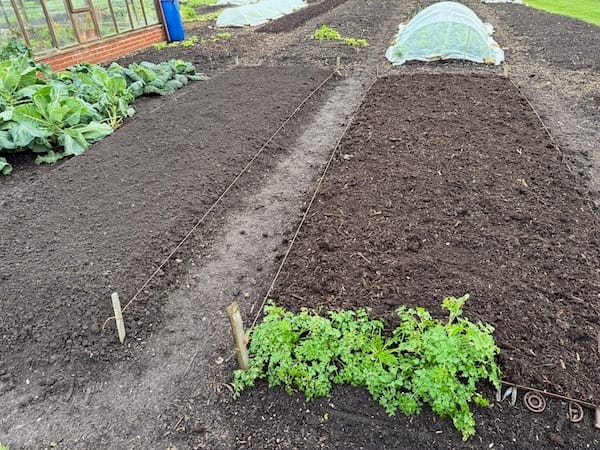
December 2025, dig bed has been dug with compost incorporated, and no dig bed has same compost on top
I had this lovely comment: “All the trials you do have made my husband a believer in no dig. He's an engineer and he appreciates seeing these trials. We started no dig this year and have had an amazing garden. I still have a lot to learn but you've made gardening a delight again.”
Langdon, YouTube 2022.

Harvests in 2025 were 97.5 kg dig bed, 106 kg from no dig, same compost applied and each bed is 1.5 × 5 m, 5 × 16ft.
The Season of mulching
How much compost to apply?

The beds cleared of vegetables, have all received 2-2.5 cm or just under an inch of compost
I apply every year around 2 cm new compost, but it can vary a lot. If your soil is light and sandy, maybe full of stones, I would use more, up to double-dose, and 5 - 7 cm initially. See the recent garden tour for ideas.
On the other hand, look at the message below and the success Yvonne is having using much less compost.
“I can’t overemphasise how impressed I am with the drought resistance of no dig veggies, and how easy the method makes weeding. I only use about a fourth as much compost as you do and have only been doing no dig about three years but it is vastly better than anything else I have ever tried.”
Yvonne Jackson March 2024 on YouTube.
NO DIG in winter
Few winter weeds is the biggest advantage for me. That comes from years of being careful, not to allow seeding weeds, also from using compost with not too many weed seeds in. If that is the case for you, spread it now to give you a chance of winter hoeing in late January.
You can enjoy harvests in winter, as long as you remembered the sowing dates, as in my calendar.
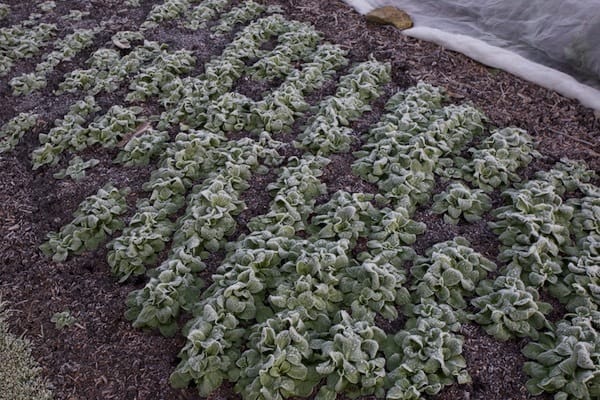
A wonderful harvest of lambs lettuce / corn salad, sown 7th September, between lettuce and cabbage
Why doing less works
1 Fertility is conserved through maintenance of biological networks.
2 Organic matter is maintained, as opposed to being lost through oxidation during digging.
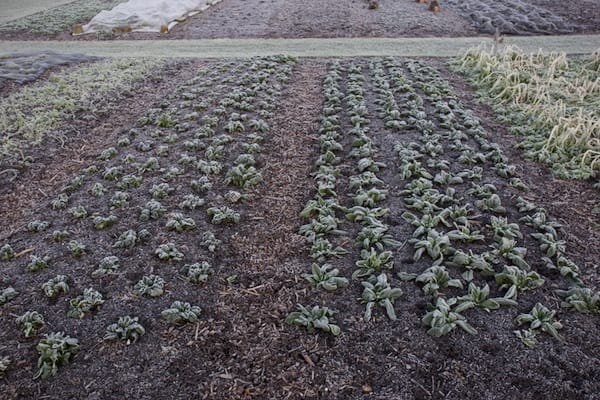
August sown spinach, Medania left and Acadia F1 right. The soil is clean here, these have hardly needed any weeds pulling while the spinach grows and we spread a little mushroom + homemade compost before planting the spinach.
Using even a little compost makes the win bigger. Try a few different amounts and see what works best. I find that using some extra compost results in time savings, because of fewer weeds, stronger moisture retention, and needing fewer plants for the same amount of harvest.

White mustard for fertility, sown 7th September and now killed by -5°C frosts - and it has the whole winter to decompose. BUT it’s too late now to sow any green manures
Celeriac this year has been an excellent example, because I didn't buy enough seeds and had fewer plants than I had meant to. I was worried about being short for the restaurants I supply.
Instead, celeriac of consistently 1.5 to 2.2 kg mean there is plenty. Adam harvested it all because we are now in a spell of consistently wet weather, meaning by mid-December the leaves on top would rot, and take that decomposition into the main root.
Celeriac stores very easily. We leave some soil on the roots but not a lot, and put them in boxes or crates. They can keep nicely for up to 4 or even 5 months.
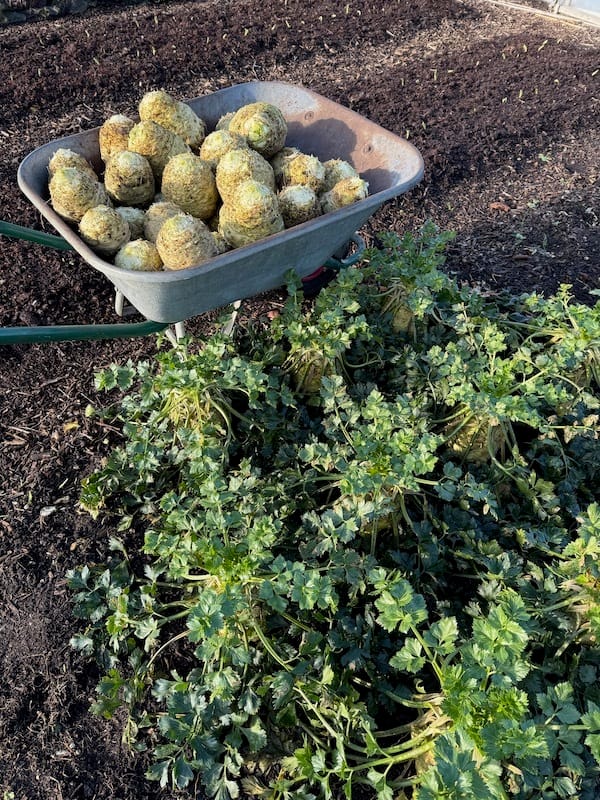
Celeriac harvest late November, from a bed which already gave a leek harvest.



Get Charles's advice in his free newsletter
& 10% off your first order in our shop